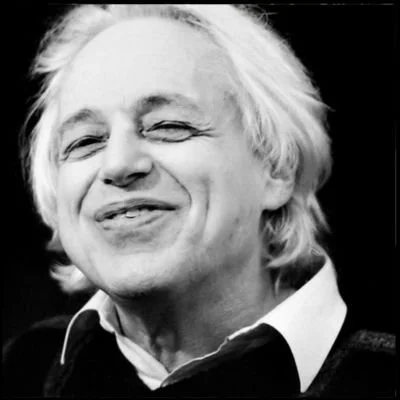
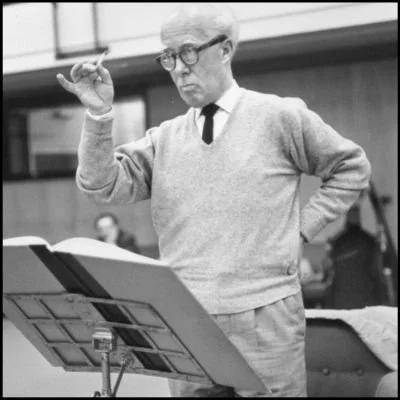
When György Ligeti was a child he had a recurring dream. In it, a vast network of tangled fibres hung around his bed; even the smallest movement would cause the whole structure to shudder and pulsate. Related many years later, this core memory has become a popular analogy for what the composer called ‘micropolyphony’ – music made up of many individual lines, each moving at different speeds and by varying degrees, combining to create a shimmering cluster of sound …
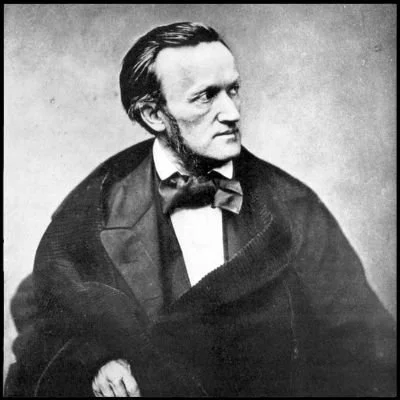
Wagner – profile (LSO)
Mozart, Rihm and Schubert: Piano Four Hands (LSO St Luke‘s Spotlight)
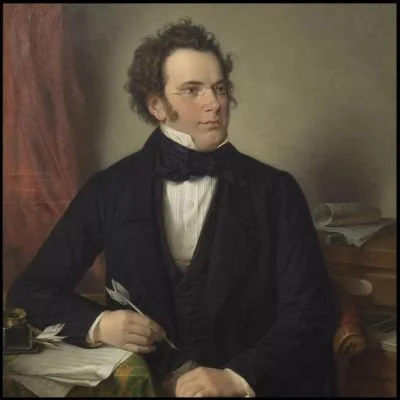
Both Mozart and Schubert were fond of four-hands piano music. As children, Mozart and his sister Nannerl would perform duets on their tours of aristocratic Europe, while Schubert’s first surviving work – written when he was 13 – is a four-hands Fantasy. Later in life each would contribute handsomely to the genre, composing works that far outshone the domestic role it had traditionally occupied …
Stravinsky: Divertimento from The Fairy’s Kiss – programme note (LSO)
Stravinsky was one of the 20th century’s great tastemakers. His new works generallycame as a surprise – and few more so than The Fairy’s Kiss, a ballet based on music by Tchaikovsky. The Romantic master was, at the time, firmly old hat. He seemed to embody all that Modernist Stravinsky eschewed: decadence, lyricism, sentimentality. And yet, when the work was unveiled at the Paris Opéra – performed by former Ballet Russes dancer Ida Rubinstein’s new company – it eluded these criticisms. Stravinsky, it seems, had taken the old hat and made it vintage …
Márton Illés: Vont-tér – programme note and profile (LSO)
Vont-tér is one of several recent pieces by Márton Ellés to spotlight a string instrument. At its core is the idea of taking the physicality of string playing to its extreme – exploring, across 15 minutes of splintered, explosive gestures, the instrument’s infinite timbral possibilities, while also avoiding what Ellés calls the ‘sweetly saturated and often overused string sound’ …
Messiaen: Hymne – programme note and profile (LSO)
Thomas Adès: Aquifer – programme note (LSO)
For Thomas Adès, an aquifer is analogous to the way a composer steers a musical impulse. The strength and direction of groundwater, flowing beneath us, is dictated by geology – layers of rock with varying degrees of permeability. So must musical material be channelled through a series of compositional tools: structure, harmony, orchestration and so on. It is from this process that Aquifer gets its title – representing a kind of inverse programme, in which the music informs the subject. Here, Adès enlists the full gamut of his considerable compositional technique to steer, contain and ultimately unleash a musical wave.
Duke Ellington: profile (LSO)
Wynton Marsalis: Symphony No. 4, ‘The Jungle’ – programme note (LSO)
New York City: ‘the most fluid, pressure-packed and cosmopolitan metropolis the modern world has ever seen’, according to Wynton Marsalis. And he should know, having lived there on and off since 1979, when he arrived from New Orleans to study at the Juilliard School. Tapping into this near-40-year relationship, in 2016 the New York Philharmonic commissioned Marsalis to write a work on ‘New York-inspired themes’ for its 175th-anniversary season. The result, a sprawling, 65-minute symphony subtitled ‘The Jungle’, pays loving homage to the city, capturing its melting-pot culture and frenetic energy across six movements.
Five Reasons to love Bartók's The Miraculous Mandarin (LSO)
Olga Neuwirth: Tombeau II – Hommage à Pierre Boulez – programme note (LSO)
Mark-Anthony Turnage: Sco – programme note (LSO)
Sitting at the heart of tonight’s world premiere are two figures of huge importance to Mark-Anthony Turnage. The first, Sir Simon Rattle, for whose 70th birthday Sco was commissioned, is one of the composer’s longest-standing champions. The second is tonight’s soloist, the man who gives Sco its name, John Scofield …
Helmut Lachenmann: My Melodies – programme note and profile (LSO)
‘Everyone will be waiting for a melody, and I will of course disappoint them all!’, Helmut Lachenmann said with a grin at the 2018 premiere of My Melodies. Indeed, this mammoth piece contains scant melody in the traditional sense. Pithy cells – scraps of fragments of melody – pepper the orchestral texture, cavorting and twisting in a multi layered dialogue. Stray patterns bump up alongside toneless whispers and scrapes. But a full-blooded, tubthumping tune? No chance.
Anna Clyne: This Midnight Hour – programme note and profile (LSO)
As with so many of Anna Clyne’s orchestral works, This Midnight Hour takes inspiration from nonmusical sources, in this case two poems. The first is Charles Baudelaire’s much-anthologised ‘Harmonie du soir’ (Evening Harmony) from the 1857 collection Les fleurs du mal. Stuffed with sensory observations and evocative similes – floral scent, tortured violins, a drowning, blood-clotted sun – the poem comprises a series of woozy repetitions that fold in on themselves like a hall of mirrors …
Ondřej Adámek: Follow Me – programme note and profile (LSO)
The ‘narrative concerto’ has its roots in the early 19th century. Think Harold in Italy, Hector Berlioz’s ‘symphony with viola obbligato’, or Carl Maria von Weber’s Konzertstück for piano and orchestra, both of which cast the soloist as protagonist in a musical drama. In Follow Me, Ondřej Adámek takes this idea and adds a macabre twist …
Eric Whitacre: Eternity in an Hour – programme note (BBC Proms)
Artist, mystic and political radical William Blake is today considered one of the major cultural figures of the Romantic Age. And, although he was virtually unknown as a poet during his lifetime, Auguries of Innocence has become one of his best-loved works. Rich with symbolist imagery and social criticism, the poem meditates on the interconnectedness of all living things, the inherent goodness in nature and the fragility of human innocence …