
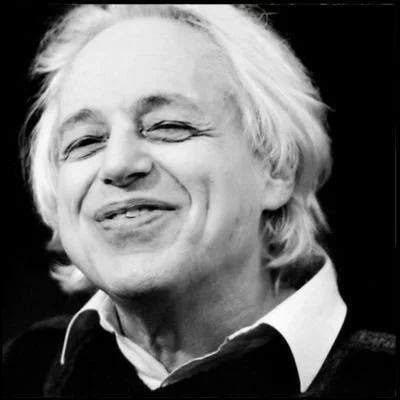
When György Ligeti was a child he had a recurring dream. In it, a vast network of tangled fibres hung around his bed; even the smallest movement would cause the whole structure to shudder and pulsate. Related many years later, this core memory has become a popular analogy for what the composer called ‘micropolyphony’ – music made up of many individual lines, each moving at different speeds and by varying degrees, combining to create a shimmering cluster of sound.
Micropolyphony sits at the heart of Ligeti’s output from the 1960s and Lontano is a masterfully study, building on the success of his breakthrough orchestral work Atmosphères (1961). The piece opens with a series of individual entries, each player holding a single note. Then, only very slightly at first, they begin to move. The sound smudges, and lines cross and combine to give the rise-and-fall impression of melody, like the half-perceptible shapes of a starling murmuration. This process evolves across three distinct phases, though within these are many subtler climaxes and changes of perspective, as well as moments of stillness.
To those unfamiliar with late-1960s avant-garde music, Lontano might sound typical of the era: atonal, amorphous, unrelatable to anything in the traditional orchestral repertoire. But when the piece first appeared it ruffled more than a few feathers among Ligeti’s colleagues. ‘[It] must be played with great expression,’ he wrote on the score; ‘fluctuations in tempo are permissible’. For hard-line Modernists such as Pierre Boulez, who rejected such Romantic affectations and scored with micro precision, this was unthinkable. The use of recognisable intervals such as fifths, and subtle quotations from past masters Bruckner and Josquin, were equally troubling. Even scoring for a large orchestra – one without any percussion – raised eyebrows.
For these reasons, Lontano is seen as the beginning of a journey that led to a more direct engagement with music from the past, with Ligeti – a composer who had always been suspicious of schools and orthodoxy – as its figurehead. The ‘little strait between Sicily and Calabria’ was how he described the line he trod between expression and atonality. It earned him an audience far beyond the fusty halls of Darmstadt. He became that rare thing: an avant-gardist with a foothold in popular culture. The soundtracks to Stanley Kubrick’s The Shining (1980) and Martin Scorsese’s Shutter Island (2010) both feature Lontano, which perfectly encapsulates those films’ psychological ambiguities, the unbearable tensions, and the deep, violent emotions experienced da lontano – ‘from afar’.