
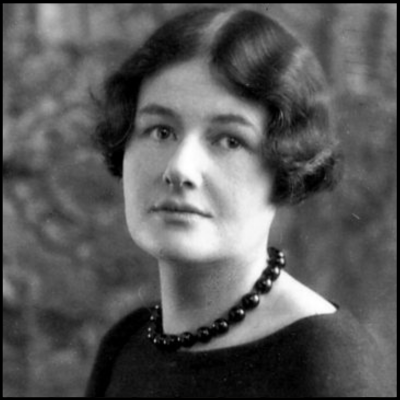
Rebecca Clarke (1886–1979) Viola Sonata (1918–19) – Impetuoso (mvt 1)
Ernest Bloch (1880–1959) Suite for Viola and Piano (1919) – Lento (mvt 3)
Bohuslav Martinů (1880–1959) Viola Sonata (1955) – Allegro non troppo (mvt 2)
Rebecca Clarke Viola Sonata – Vivace (mvt 2)
Maurice Ravel (1875–1937) Violin Sonata No. 2 (1923–7) – Allegretto (mvt 1)
Béla Bartók (1991–1945), arr. Zoltán Székely (1903–2001) Romanian Folk Dances (1915, arr. 1925)
Rebecca Clarke Viola Sonata – Adagio (mvt 3)
We have an American philanthropist to thank for not one but two of the works featured today. Elizabeth Sprague Coolidge was the money behind 1919’s Berkshire Chamber Music Festival Competition, which promised $1,000 for the best new work for viola and piano. Famously the jury couldn’t choose between two entries – Rebecca Clarke’s Sonata and Ernest Bloch’s Suite – so Coolidge had to cast the deciding vote. She plumped for the latter but was clearly smitten with both, and later commissioned Clarke’s Rhapsody for cello and piano. The Viola Sonata is easily Clarke’s best-known work. It instantly won admirers both in the USA and the UK, and it remains a popular concert piece today. Clarke was herself a violist, which she demonstrates by making the most of the instrument’s intense upper-register and chocolatey bass. There is a real Romantic intensity to the melodic writing, with impassioned outbursts and folksong-inspired reveries that nod to her English training (London-born Clarke was Standford’s first female student at the Royal College of Music). There are also hints of the floating Impressionist vocabulary of Debussy: lush 9th chords, whole-tone scales and various orientalisms, such as the pentatonic scale from which the strident main theme is built.
Ernest Bloch wrote his Viola Suite not long after emigrating to the USA from Switzerland, as his compositional career was beginning to take off. Like Clarke’s Sonata, it has a post-Romantic musical language shot through with Impressionistic touches, though its four movements take a more programmatic form. The third, which we hear today, ‘expresses the mystery of tropical nights’ as related to Bloch by a friend who once lived on Java. The dark piano chords and rumbling pedals evoke ‘the distant sounds of curious, soft, wooden instruments with strange rhythms’, and provide an appropriately exotic backdrop for the viola’s dreamy wanderings. The Suite quickly earned a place in the repertoire, and the orchestral version which Bloch subsequently made is considered the first major 20th-century work for viola and orchestra.
It is worth noting that, with a few exceptions – Berlioz’s Harold in Italy being the main one – the viola had until that point been kept out of the spotlight. The increase in such works around the turn of the century was partly inspired by a new generation of players, including Paul Hindemith and Lillian Fuchs, whose virtuosity opened composers’ ears to the instrument’s solo potential. It was Fuchs, for example, who inspired the Bohemian-born Bohuslav Martinů to write his Viola Sonata. Another émigré to the USA, Martinů first encountered Fuchs performing Mozart duos with her brother in New York. As with all Martinů’s music, the Sonata doesn’t belong to any of the post-war modernist ‘schools’, though the influence of Debussy (harmonic) and Stravinsky (timbral) is clear. The energetic second movement also contains syncopated nods to both Bohemian folk song and ragtime, creating a sense of being caught between two worlds. Also with a foot in two continents is Ravel’s Violin Sonata No. 2, finished just before his first trip to the USA, where his love of Black idioms elicited a great deal of gossip in the press. Today, rather than the famous middle-movement ‘Blues’, we hear the standoffish first movement. Here Ravel leans on what he called the two instruments’ ‘essential incompatibility’, accentuating their different timbres by setting a singing, legato violin against a relatively bare, percussive accompaniment.
Rounding out the programme is a set of vigorous folk-song transcriptions by Bartók, originally written for solo piano but arranged for violin and piano by his friend and compatriot Zoltán Székely. A keen ethnomusicologist, Bartók picked up the tunes during trips to Transylvania between 1910 and 1912. The Dances have become one of his most popular works, their modal tunes and vibrant dance rhythms a joyful and approachable showcase for any violinist.