
Wolfgang Amadeus Mozart
Sonata in F major for piano four hands (1786)
Wolfgang Rihm
Several Short Waltzes for piano four hands (1979—88) – Nos. 1, 2, 4, 5, 13, 18
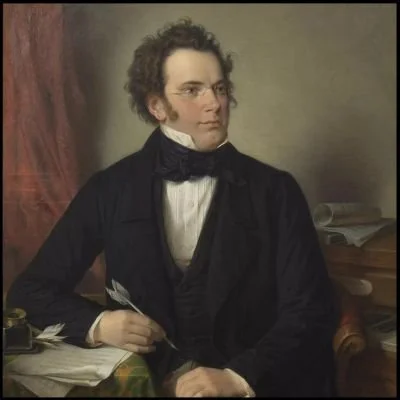
Franz Schubert
Fantasy in F minor for piano four hands (1828)
Both Mozart and Schubert were fond of four-hands piano music. As children, Mozart and his sister Nannerl would perform duets on their tours of aristocratic Europe, while Schubert’s first surviving work – written when he was 13 – is a four-hands Fantasy. Later in life each would contribute handsomely to the genre, composing works that far outshone the domestic role it had traditionally occupied.
Tonight’s concert is framed by two of these. Mozart’s Sonata in F major, K497 was written in the summer of 1786 by a composer at the peak of his powers. The 30-year-old had by now successfully established himself as a freelance musician in Vienna, and probably wrote this piece for the daughter of botanist Nikolaus Joseph von Jacquin, one of his circle of distinguished friends and patrons in the city. The young Franziska was a talented pianist – as the duet’s scope and technical demands would suggest. Each of the three movements features knotty layers of counterpoint and elaborate dialogue between the two players. The rondo finale in particular makes liberal use of canon and fugato, concerto-like scale passages and bold appoggiaturas. Mozart also revels in unexpected modulations and chromatic shapes, as in the searching preface to the first movement – a forerunner of the slow introductions to his last four symphonies – and the subsequent, bubbling Allegro di molto.
With the premiere of The Marriage of Figaro, alongside other major works such as the Fourth Horn Concerto and K488–503 piano concertos, 1786 would prove to be one of Mozart’s busiest years. Schubert’s Fantasy in F minor is the product of an equally astonishing period: between spring and autumn 1828 the composer finished this four-hands duet and wrote three solo piano sonatas, a string quintet and his 14 ‘Swan Song’ settings. Then, on 5 November, he took to bed with a fever, dying soon after. Since contracting syphilis in 1823 – essentially a death sentence at the time – Schubert had coped with crippling anxiety, and it is hard not to hear in these late works the voice of a man who knows his end is near. The Fantasy’s dotted opening theme is a case in point: simple, desolate, devastating – archetypal Schubert. He then leads us down a wandering path, passing without pause through a brief, lyrical Largo and a wild Scherzo, before returning to the opening theme which, after a brief fugal interlude, seals a desolate coda.
The smiling centre of tonight’s programme comprises a selection of four-hands waltzes by Germany’s late, great Opa of contemporary music Wolfgang Rihm, who died in 2024 with an astonishing 500 works to his name. Written in the spirit of gentle satire and affection, these miniatures form part of a piano-waltz tradition that stretches back via Ravel and Brahms to Schubert. As such, Rihm delights in tongue-in-cheek references to his forbears: No. 2 oozes Schubertian yearning, No. 7 is a thumping dig at Prokofiev; No. 9 summons the aimless waft of Satie. He also fills the set with musical in-jokes – ‘wrong’ notes, odd phrasings, misleading cadences – that poke fun at the tradition of amateur music-making, as well as the odd cryptic marking, hinting at the dinner-party setting in which many of these pieces would have first been heard. No. 8, for example, features sections marked ‘Rottkappchen’ (Little Red Riding Hood) and ‘Böser Wolf’ (Big Bad Wolf), while No. 18 is designated the ‘Ear and Worm Waltz’. As Rihm explained, these waltzes were written either as gifts (like so many of Chopin’s) or for ‘newly arrived composing guests in order to whet the palette’. Shut your eyes and you can hear the hear clinking of schnapps glasses and the chuckling of good company.