
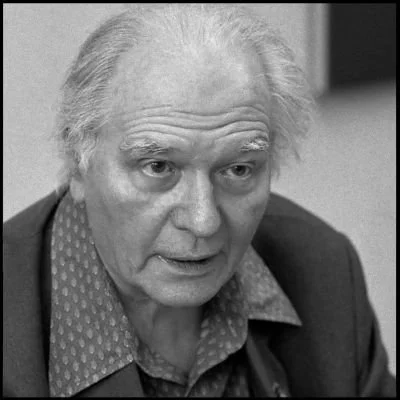
No matter the genre, the declared purpose of Messiaen’s music remained consistent throughout his life: to manifest the doctrines of his deeply held Catholic faith. The Hymne is one of a sequence of early-career orchestral works inspired by these doctrines. Originally titled Hymne au Saint-Sacrement, its mosaic structure – a sequence of distinct panels, repeated with variations – reflects the ritual of the Eucharist. The themes themselves represent Eucharistic concepts: in the original programme note we are told how ‘the first, laudatory theme sings the glory of the Lord’, while the second ‘expresses the union of love between Jesus and the communicant’. Messiaen also included a poetic preface to his score to emphasise its theology:
I sing of the gift of the divine essence,
The flesh of Jesus Christ,
His flesh and his blood,
I sing of the banquet of struggle and strength
(Bond of unity in love),
I sing of who is in us (and we are in him),
The living bread descending from heaven,
The living bread who gives life,
Eternal life!
We have the conductor Leopold Stokowski to thank for the version of Hymne that we hear tonight. The original was lost by Messiaen’s publisher during the Second World War. On Stokowski’s request the composer reconstructed it from memory – a remarkable feat considering its size and complexity. Though we cannot know exactly how faithful this version is to the original, it offers a partial window onto the young Messiaen’s burgeoning style. The unanchored, modal melodies, densely wrapped in sumptuous harmonies, for example. These exhibit his interest in non-Western styles as well as an early indebtedness to Debussy. Meanwhile the bounding, brassy climax (‘the pledge of unending joy in Heaven’) prefigures the ecstatic celebrations that are so central to his symphonic masterpiece Turangalîla.
Hymne also provides us with a fascinating glimpse into Messiaen’s synaesthesia – the way he associated different sounds with colour patterns. In a programme note written during the 1960s he describes the piece in terms of its ‘colour effects’ – in other words, the harmonic shapes and their corresponding colours. The manic central panel, for example, ‘combines gold and brown to orange striped with red, orange and milk white to green and gold.’ Then ‘a full crescendo takes off on the blue-violets and greens, and rises up to the red and gold of the final fanfare of trumpets, which magnifies the lyric elements’. Alongside his spiritual motivations, this ability to perceive music on an entirely different plane is one of many ways Messiaen distinguished himself from his modernist contemporaries.
Olivier Messiaen (1908–92)
Messiaen was born in Avignon and grew up in Grenoble. But the vast majority of his life was spent in Paris, bound up with two of the city’s great institutions: the Conservatoire, which he entered aged 11, and where he would later teach the likes of Iannis Xenakis and Karlheinz Stockhausen; and the Sainte-Trinité church, where he was organist from 1931 until his death.
It was while studying at the Conservatoire that he cultivated two key elements of his technique: the use of modal melodies and irregular rhythmic cycles, inspired by non-Western musical cultures – particularly those from India. Wrapped in rich, slow-moving harmonies and presented in unusual block structures, these give his music an often ritualistic, meditative feel. Key early examples include La Nativité du Seigneur (1935) and Les corps glorieux (1939), organ works which simultaneously honour and subvert the traditions of the French symphonic school, and the orchestral suite L’Ascension (1932–3).
Called up as a medical orderly during the Second World War, Messiaen was captured and sent to a POW camp. While there he wrote and premiered the Quartet for the End of Time (1940–41), his first work to reference birdsong. It sparked a life-long obsession that flowered in the piano cycle Catalogue d’oiseaux (1956–8). Another important facet of his style is the bounding, syncopated dances that suffuse his most famous orchestral work, the Turangalîla Symphony (1946–8). This vast celebration of love, rhythm and abstraction owes much to the dazzling pianism of his wife, Yvonne Loriod, for whom he wrote the solo-piano cycle Vingt regards sur l’Enfant-Jésus (1944), as well as to Stravinsky, whose Rite of Spring was a vital touchstone.
Suffusing all his music is a profound Catholic spirituality, and his later life saw a series of monumental proclamations of faith that drew together the various aspects of his style: the choral-orchestral La transfiguration de notre Seigneur Jésus-Christ (1965–9), the immense opera Saint Francis of Assisi (1975–83) and his last completed work, Éclairs sur l’au‑delà … (1988–92), which was premiered by the New York Philharmonic six months after his death.