
Part 1
A The Prologue: Lento moderato
B The Seven Ages: Variations 1–7
C The Seven Stages: Variations 8–14
Part 2
A The Dirge
B The Masque
C The Epilogue
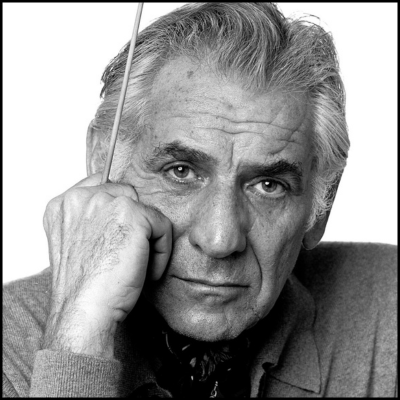
Bernstein was a composer interested in juxtaposition – between the epic and the everyday, the classical and the vernacular. West Side Story sees Shakespeare removed to New York’s urban jungle. The Chichester Psalms sets ancient Hebrew texts to tunes from an abandoned Broadway musical. A symphony inspired by ‘The Age of Anxiety’ is another case in point. W. H. Auden’s Pulitzer-prize winning poem resets the tradition of a shepherd’s dialogue, or ‘eclogue’, by recounting the wartime reflections of four strangers who meet in a New York bar. Bernstein – a fan of Auden’s since at least his late teens – read the poem in 1947, the year it was published, and immediately saw musical potential. He found a deep affinity with its angsty, existential themes and invented a novel symphonic form to suit his own understanding of them: ‘I imagine that the conception of a symphony with piano solo emerges from the extreme personal identification of myself with the poem,’ he wrote. ‘In this sense, the pianist provides an almost autobiographical mirror in which he sees himself, analytically in the modern ambiance. The work is therefore no concerto, in the virtuosic sense.’
The symphony’s musical shoots date back much earlier than this. In a 1944 letter to Serge Koussevitzky, then Music Director of the Boston Symphony Orchestra, Bernstein included a sketch that he hoped would grow ‘into a composition worthy of your greatness’. This was itself based on material from a 1939 score Berstein had written for a Harvard University production. By 1949 it had flowered into the plaintive clarinet duet that opens the work, symbolising Auden’s four lonely characters as they embark upon ‘a kind of symposium on the state of man’. This is followed by two sets of lively, stylistically wide-ranging variations – though not in the traditional sense: instead of picking apart a single theme, in each variation Bernstein develops an idea introduced in the previous one. The drama builds to an anxious conclusion as the four drinkers emerge ‘united through a common experience (and through alcohol)’. The second half of the symphony is also split into three continuous sections: a lament to lost faith, a bluesy scherzo (featuring a melody pinched from his musical On the Town) and a triumphant coda in which Bernstein reasserts a sense of faith and determination.
Completed in a mad scramble in March 1949, ‘The Age of Anxiety’ was premiered the following month to great acclaim, with Koussevitzky conducting the BSO and Bernstein himself at the piano.