
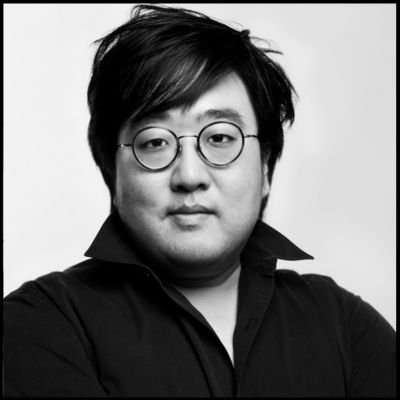
Donghoon Shin (born 1983)
My Shadow (2021)
Brahms (1833–97)
Piano Quartet No. 1 in G minor, Op. 25 (1857–61)
The written word is an important source of inspiration for Donghoon Shin. Works by Jorge Luis Borges and W. B. Yeats, for example, have left a deep imprint on the South Korean composer’s output. My Shadow takes its name from a children’s poem by another literary figure, Robert Louis Stevenson. This delicate chamber work sets a chorus of bowed and blown instruments – two violins, a cello and a clarinet – in opposition to the more percussive piano. Shin’s aim is to unpack and illuminate their timbral differences. As such, the piano sits independently within the texture, flitting between imitation, contrast and domination – like Stevenson’s titular ‘shadow’: ‘For he sometimes shoots up taller like an india-rubber ball, / And he sometimes gets so little that there's none of him at all.’
But where Stevenson’s poem is lighthearted, Shin’s sound-world is nocturnal and mysterious. Sighing, moonlit evocations are met with scurrying gestures and murky outbursts. A sense of unease is further heightened by the work’s stop-start nature, divided as it is into 10 ‘contrapuntal miniatures’, as the composer calls them. All this reflects Shin’s other aim: to write ‘a contemplation on the dark side of the soul’. Yet, as in all his music, an inherent, tightly controlled lyricism and flair for instrumental colour knits the miniatures together, giving My Shadow an emotional potency reminiscent of one of Shin’s great heroes, Alban Berg.
If My Shadow demonstrates a composer confident and settled in his style, Brahms’s First Piano Quartet exhibits the German in a period of intense study and self-scrutiny, caught between the turbulent contrasts of his early works and the more considered, Classical stance of his late twenties. He conceived the work as early as 1857, sketching it out while working as a teacher and conductor at the ducal court in Detmold. But it wasn’t finished until 1861, not long after a draft manifesto condemning the ‘Music of the Future’ (ie the literary-orientated works of Liszt and his circle), written with his friend Joseph Joachim, was leaked to the press, causing great embarrassment to both.
Brahms’s reverence for past models, and his commitment to innovation within them, is on full display here. The opening Allegro is his most expansive sonata-form movement yet. Its exposition has a whopping five thematic groups, the first of which is then condensed and ruthlessly developed, bringing tensions to boiling point. When the relief of recapitulation arrives, it begins in G major (rather than the tonic, G minor), and with the middle (rather than initial) segment of the opening theme. In another deviation, Brahms choses for his second movement a gently bubbling Intermezzo (instead of, say, a scherzo). It’s a form he would later make his own, most famously in the Op. 118 No. 2 for solo piano, and the yearning, melancholy mood offers the perfect platform for a spot of youthful pining: the main theme reworks Robert Schumann’s ‘Clara’ motif, symbolising Brahms’s hopeless love for the wife of his mentor.
Any tension is soon dissolved in the third-movement Andante con moto, a proud, soldierly march that paves the way for the vivacious rondo finale. Here Brahms demonstrates his love of Hungarian folk music, which he first encountered as a teenager in Hamburg and which was later reinforced by his Hungarian violinist friends Joachim and Eduard Reményi. Irregular rhythms, heavy rubato and an extravagant cadenza make for a virtuosic display, building on a tradition of finales ‘in the Gypsy style’ that stretches back to Haydn. The final thumping chord concludes a work whose symphonic architecture and astonishing expressive range Schoenberg would recognise 70 years later when he made his own flamboyant orchestration.