
© Jennifer Taylor
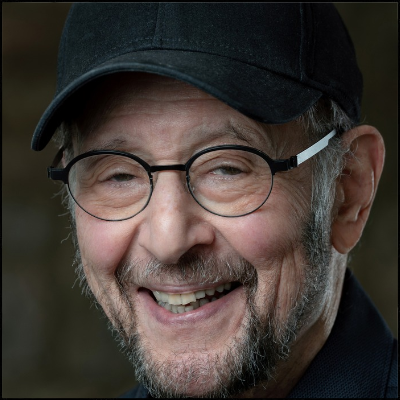
Reich’s particular skill as a Minimalist composer is his ability to continuously shed new light on the same, apparently simple material. This necessarily means that his music unfurls gradually, at once reflective and revelatory, unified and fluid. The same thing could also be said of his development as a composer. Throughout his career Reich has maintained a fundamental interest: to spotlight the very processes that give each piece its overall form – whether that be phasing, variations, augmentation, etc. – making them the ends as well as the means. At the same time, he has continuously found new, ever more subtle ways to express this. Tonight’s concert offers a birds-eye view of that ‘gradual process’, with works stretching from his early years as a member of the New York counterculture to the large-scale orchestral pieces of the 1980s and beyond.
Music for a Large Ensemble was written at the peak of Reich’s early maturity, not long after his breakout hit Music for 18 Musicians (1974–6). The huge success of that work had encouraged him to start publishing his music, which up until that point he had generally performed with his own ensemble, Steve Reich and Musicians. It also brought him to the attention of establishment institutions such as the Holland Festival in Amsterdam, which in 1978 commissioned him to write a piece for the following year’s festival, to be performed by the Netherlands Wind Ensemble along with members of Reich’s own group. In terms of forces, this would be his largest work yet (around 30 players, with several instruments mic’d up), offering him both a richer colour palette and the opportunity to explore ‘process’ on a grander scale.
The dual process that governs Music for a Large Ensemble is one of melodic expansion and reduction. Each of the work’s four sections can be subdivided into a five-part arch: ABCBA. Here, short, repeating riffs, vamped by pianos, marimbas and xylophones, are gradually extended through A to B to C, reaching an apex before returning to their original length (B to A). This stringing together of short patterns to create an extended melody is something Reich had explored in Music for 18 Musicians and was further spurred by his recent study of traditional Jewish psalm singing or ‘cantillation’. The four central apexes, meanwhile, are marked by a set of broad, sustained chords played by four trumpets, each written ‘to take one comfortable breath to perform’. Reich had first developed an interest in using human breath as a measure of duration in 1973’s Music for Mallet Instruments, Voices and Organ, and it neatly reflects a key element of his overall style: that sense of being simultaneously mechanical and organic.
The overall effect of Music for a Large Ensemble is bright and joyful. Each sounding of trumpets is like some great, satisfied sigh. Beneath, the pulsing syncopations revolve like circles within circles, giving the work a sense of infinity, so that when the end does actually arrive it is as though the music has simply been switched off. Also important is the sense of ceremony. Like Music for 18 Musicians, this piece was written be watched as well as heard – a performance in the truest sense, with players passing around melody as in some great, ancient ritual. The optional, amplified women’s voices, singing only vowel sounds, only adds to this sense.
Though the general direction of Reich’s music during the 1970s was towards ever-larger forces, a few works from that era went against the prevailing current. These include the much-loved Clapping Music (1972) and, written a year later, Music for Pieces of Wood. Both were a response to the practical demands of pieces such as Drumming (1970–71): as he began touring more widely with his ensemble, Reich yearned for music that could be performed without a vanload of gear. Music for Pieces of Wood is scored for five pairs of tuned claves – a simple percussion instrument, originally from Cuba, which makes a bright, penetrating sound as two pieces of hardwood are struck together. In Latin-American dance music claves often play ostinato patterns, or ‘keys’ (in Spanish, claves), repeat figures that help root the other players in a groove. Reich nods to this with his own repeated ostinato (the same one found in Clapping Music, in fact). From here he builds outwards using a method that he calls ‘rhythmic construction’.
Rhythmic construction represents an early shift in Reich’s development. His initial creative breakthrough was based on repetitions in two or more lines drifting apart – known as ‘phase music’. Clapping Music was the last piece he wrote based purely on that process. Phasing is still integral to Music for Pieces of Wood, but rhythmic construction puts another, simultaneous process in play – one of revelation. Reich splits his ensemble into two groups. The first group acts as a constant: one player beats the pulse (like a metronome); another beats the root ostinato figure. The second group supplies the revelation: one by one each player fills rests with beats, until all three are beating the same root ostinato figure. The point at which they begin that figure, however, is staggered (or phased), so that each new entry emphasises a different overlying pulse. Ever the gradualist, Reich had already experimented with rhythmic construction in Drumming and then again in Six Pianos (1973). He had also tried something similar in 1970’s Four Organs, which caused uproar when it was performed for the Boston Symphony Orchestra’s subscription audience at Carnegie Hall (the conductor, Michael Tilson Thomas, later recalled how one woman walked down the aisle and banged her head on the stage, wailing: ‘Stop, stop, I confess’).
As well as a certain mania, what rhythmic construction gives to all these early pieces – in opposition to Music for a Large Ensemble, which seems to appear fully formed – is a clear sense of direction. In Music for Pieces of Wood there are three ‘revelations’ in all, and Reich amplifies (literally) the thickening texture and metric instability by instructing the players to crescendo with the momentum. With each set of claves pitched to a different note, their unison fortissimo makes for quite the climax. (In his own programme note Reich calls the piece ‘one of the loudest I have ever composed’.) Moreover, Reich gradually shortens the root ostinato figure from six beats to four to three, which serves to ratchet up the tension across the whole piece and points to a thumping, unequivocal finish.
The next piece on tonight’s programme, Variations for Winds, Strings and Keyboards, dates from the very end of the 1970s and strikes a more questing, pensive tone. Here Reich brings his own take to an age-old device: the chaconne. In a Baroque chaconne, a short, repeated chord sequence underpins a set of melodic variations. Reich does the same – but his circular chord sequence is stretched out on an epic scale, with three complete cycles taking around six, 10 and nine minutes respectively. Against this the winds and keys provide a continuous stream of twinkling melody in canon (ie phased), which becomes more florid as the work progresses. This chaconne/canon hybrid has a famous forerunner, Pachelbel’s Canon, a piece which had recently entered the cultural mainstream. Whether directly influenced or not, Reich demonstrates another key aspect of his style: an all-embracing musical vision – one that placed him in direct opposition to ultra-modernists of the era such as Boulez and Stockhausen who rejected the past outright. To look the other direction, perhaps the most famous contemporary chaconne is Max Richter’s On the Nature of Daylight, which has featured in soundtracks to films from Shutter Island to Arrival to Hamnet. It is surely no coincidence that Richter cites Reich as a major influence on his own brand of ambient Minimalism.
The Variations was premiered in tonight’s full-orchestral form by the San Francisco Symphony in May 1980. Written six years later, Three Movements builds on the same idea of slow-moving chord progressions while hinting at another recent development in Reich’s style – the tackling of extra-musical subjects. This had begun with The Desert Music (1982–4), which set poetry by William Carlos Williams and offered a warning of the dangers of nuclear warfare. He would do it again in one of his most celebrated works, 1988’s Different Trains, which compares the long train journeys Reich made as a child with those made at the same time by Jewish children in Nazi-occupied Europe. The programme in Three Movements is more oblique. As Reich writes, ‘This slow change from chord to chord may suggest the changing light as clouds move slowly across the sky, or, in musical terms, it may recall the middle piece in Schoenberg’s Five Pieces for Orchestra, “Summer Morning by a Lake (Colours)”.
While the atmosphere Reich conjures is a little stormier than a lakeside reverie might suggest, there is certainly a clear sense of the ever-shifting. This is partly due to the constant presence of diminished seventh chords, traditionally used as a musical pivot point (and containing the so-called ‘Devil’s interval’ of a tritone – by the 1980s Reich had become more interested in scrunchy harmony). And though the work closes on A minor, providing a resolution of sorts, Reich leaves room for doubt with a ringing added seventh: his clouds are left circling. Phasing and other rhythmic trickery only add to the tempest. The finale, for example, contains what Reich calls a ‘mensuration’ canon, in which the same subject appears simultaneously but at two different speeds. (The finale of Sibelius’s Fifth Symphony contains a famous example of this same process, with the soaring horn ‘swan’ theme mirrored at one third the speed in the double basses.) As in The Desert Music, Reich suggests a specific seating plan to help the audience visualise the overlapping sets of melodic material. He divides the strings into two equal groups, placed either side of a central vamping section (marimbas, vibraphones and pianos). This setup also gives the whole ensemble sight of the pulsing nerve centre, encouraging ‘one unified rhythm direction’, as Reich puts it.
We skip forwards three decades for the final piece on tonight’s programme. Written in 2018, Music for Ensemble and Orchestra neatly gathers many of the different threads we have encountered so far. Like Music for a Large Ensemble, it maintains a sense of Esher-like infinity with its constant piano-led pulse and arch structure (across five continuous movements the primary note value of the piano vamp shifts from 16 to 8 to 4, then back again from 4 to 8 to 16). Like Three Movements, its harmonies often sound suspended or scrunchy, with no definite sense of a home key. And, as in the Variations, Reich takes a Baroque model and stretches it – in this case concerto grosso. This format traditionally sees musical material passed between a small group of soloists and a full orchestra. Reich’s group, however, comprises 20 players – strings, winds, brass, electric bass, vibraphones, pianos. Such a large number of solo parts gives the piece the feel of chamber music, allowing Reich to ‘write the intricate, detailed music that I like to write’.
And the detail is startling. The soloists drift in and out of the accompanying texture, offering up bursts of melody that cause chain reactions among the ensemble – like cells dividing. The ostinato patterns are more angular than we have so far heard, crafted from unusual scales and often sounded in octaves or in large unison groups, giving them a distinctly non-Western flavour. Meanwhile the combinations of timbres – electric bass with piano and vibraphone, for example – give echoes of jazz and gamelan. Offering a lateral counterargument to these vertical-sounding passages, in the second movement Reich introduces a new style of ostinato based on slowly a rising scale. This, he says, is a ‘tip of the hat’ to the surging opening melody from J. S. Bach’s Fifth Brandenburg Concerto, itself a sort-of concerto grosso. Using scales in this way is something he’d never done before – ‘but they work!’. Once again, Reich demonstrates his essential philosophy, looking backwards to go forwards, always moving, gradually, inexorably.